By Philip Yatai
The adoption of Jolly Phonics by the Kaduna State Government to teach pupils how to read and write in the state’s public primary schools has begun to pay off.
This became evident after some primary one pupils of Malam Jalo Model Primary School, Rigachikun, Kaduna, demonstrated the ability to read and write.
Some of the pupils attributed the development to the use of jolly phonics method in teaching, a technique that focus on sounds; how letters could be pronounced, blended and grouped to form sound.
A primary one pupil of the school, Fauziya Abubakar, who demonstrated how to read and write simple words, said that she learned fast because the teachers use songs and sounds to teach them.
She said that they were taught how to recognise letters by their sounds and how they can be group to form words, adding that the process involves singing and demonstration, including dancing.
“The process made it very easy for us to understand what our teachers are teaching us and how we can read and write with ease,” she said.
Another primary one pupil, Muhammad Abdullahi, said he learned how to read and write because of the singing and dancing that were part of the teaching process.
“A song is attached to every letter for us to understand the sound and how best to pronounce them. This made it easy for us to recognise letters, their sound and how to join two or more letter to form words.
“It is really fun. It has made learning very interesting and easy,” Abdullhi said.
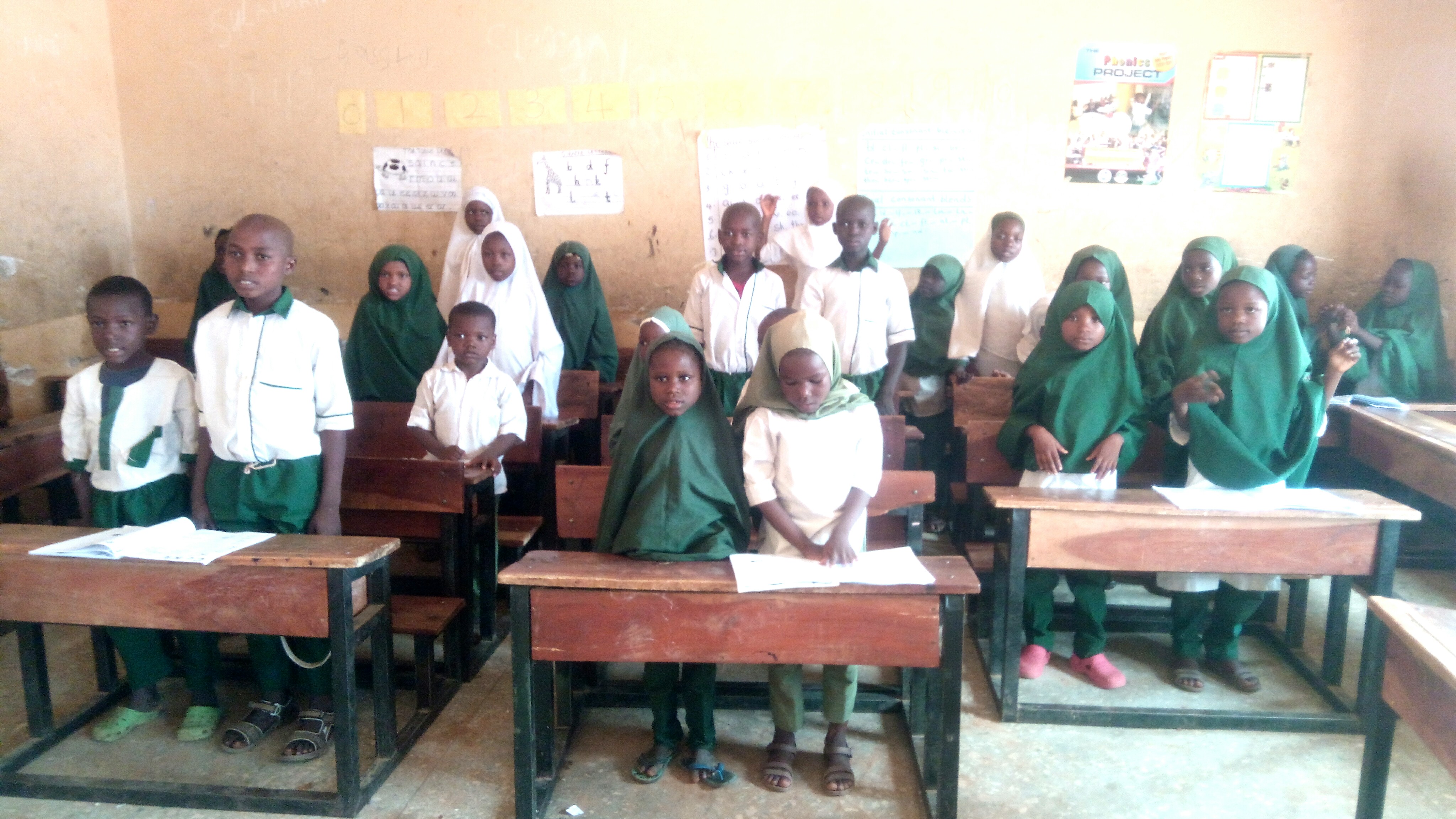
The Head Teacher of the School, Asabe Danlami, said that the jolly phonics method had greatly enhance teaching and learning in the school.
She added that most primary one teachers in the school had been train on how best to use the technique to effectively teach primary pupils how to read and write.
“The use of sound, songs, dancing and other forms of demonstration attracts the attention and interest of the pupils and made teaching very easy and interesting.
“I can assure you that about 70 per cent of primary pupils in this school can identify letters, their sounds and could read simple words,” she said.
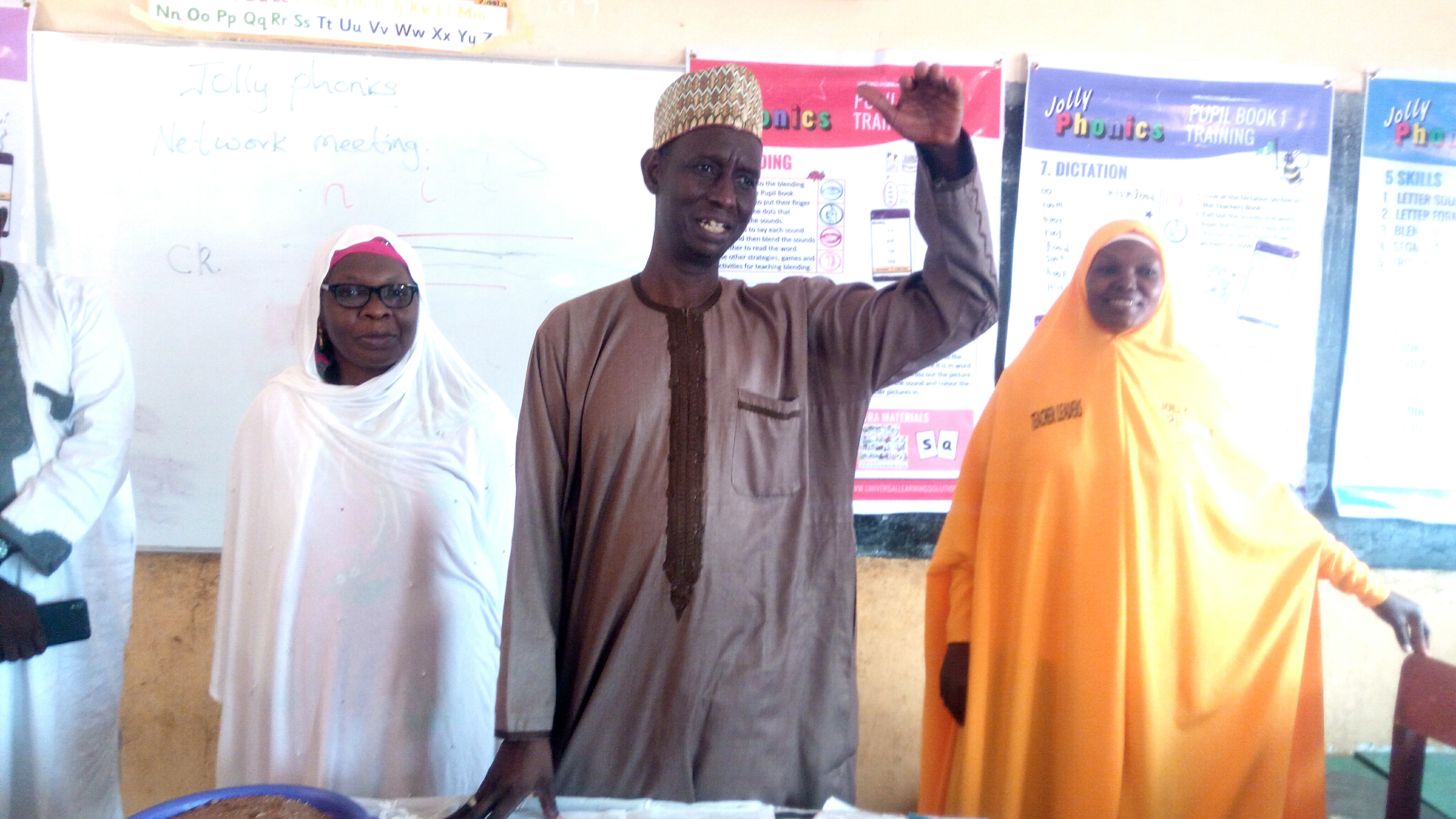
Malam Dahuru Anchau, Director, Public Schools in the state’s Ministry of Education, Science and Technology, said about 3,500 primary one teachers across the state have been trained on the method.
Anchau, who is also the Project Coordinator, Global Partnership for Education (GPE) in the state, said the training was being conducted with funding from GPE.
Anchau, who was in the school to monitor ongoing training of some of the primary one teachers, explained that the GPE grant to the state was 21.5 million U.S. dollars amounting to about six billion.
He said that the amount was to be expended in four years on school improvement and capacity building for teachers among other components, adding that the state is in the third year of implementation.
He said that jolly phonics training was designed for all primary one to three teachers in the state.
Also speaking, Hajiya Halima Jumare, also a Director in the ministry and the Component Lead, GPE Teacher Professional Development in the state, said jolly phonics was very effective in teaching children.
“We adopted the Jolly phonics techniques because of its effectiveness in helping young ones with literacy and numeracy skills, because children learn fast when stimulated with singing dancing and drama.
“The training was part of the current government effort to improve the quality of teaching and learning in public schools to be at par or above private schools,” she added.
 Development Diary