By Philip Yatai
Some Non-Governmental Organisations monitoring the National Home-Grown School Feeding Programme (NHGSFP) in Kaduna state have begun building community structure to strengthen community engagement and ownership of the programme for sustainability.
The NGOs are Action Aid Nigeria, Connecting Gender for Development, Girl Child Concern, Federation of Muslim Women’s Association in Nigeria and Nigerian Popular Theatre Alliance.
Mr Kehinde Arowosegbe, Project Coordinator, Action Aid Nigeria, said at a one-day meeting in Zaria on Saturday, that the cohort, with funding from MacArthur Foundation have been Promoting Accountability and Transparency in School Feeding (PATS-F).
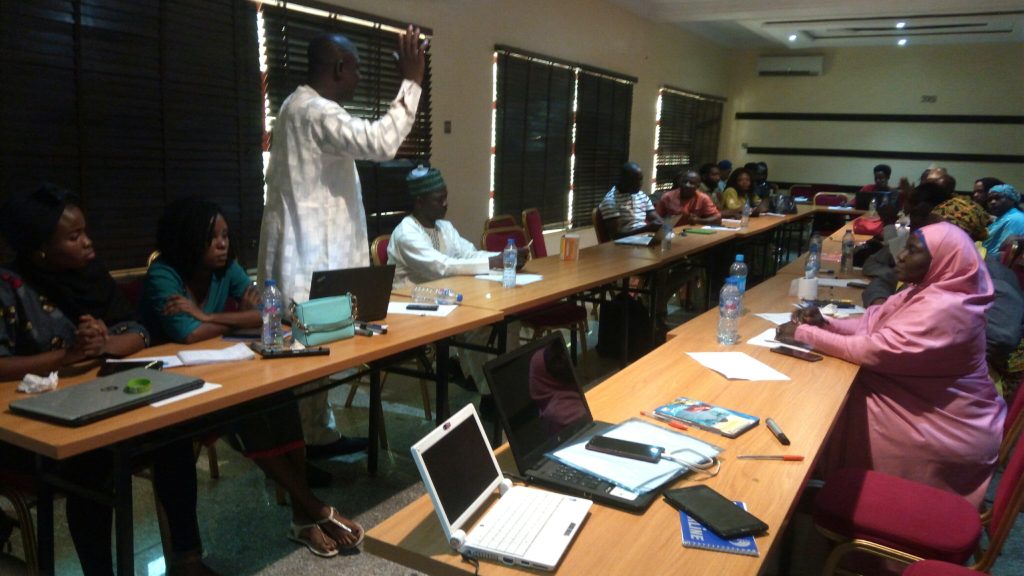
The one-day meeting was organised to share experience on the state-wide advocacy visits to traditional rulers in 22 Local Government Areas of the state.
Arowosegbe explained that the cohort were monitoring the NHGSFP in 400 out of the 4,260 primary schools in the state, representing about 10 per cent of the school.
He explained that advocacy visits were carried out to link the School-Based Management Committees (SBMCs) with traditional rulers as part of community mobilisation to own the programme.
According to him, this is necessary to ensure community ownership and sustainability of the monitoring activities to ensure the success of the school feeding programme in the state.
“Recently, Action Aid Nigeria along with the other cohort organisations, undertook advocacy visits to traditional leaders in 22 LGAs with a view to building community structure for the programme.
“The goal was for the community to own and sustain the school feeding programme given its laudable benefits to the communities, particularly in boosting enrollment, ensuring retention, completion and transition.
He commended the Kaduna state government in standardising the programme in the state by establishing a structure and appointing technocrats and critical officials to ensure smooth implementation of the programme.
Also speaking, PATS-F Field Monitor, Mr Isah Suleiman, said that the objective of the meeting was to share experience, based on the state-wide advocacy visits conducted.
Suleiman also said that the meeting was organised to strategize on approaches to community engagement using existing community structure to achieve accountability and transparency.
“The meeting will also enable us to identify and document successes, challenges and the perception of people at the grassroots about the home-grown school feeding programme and deliberate on way forward,” he added.
Earlier, Malam Umar Abdullahi, Programme Manager of the HGSFP in the state, thanked Action Aid and the other cohort for supporting the government effectively deliver the programme.
“I strongly believe that this experience sharing will enable us develop best practices on what we will be doing in the coming year to ensure the success of the programme in the state,” Abdullahi said.
According to him, engaging the community will go a long way in ensuring the success of the programme through taking ownership of the programme for sustainability.
 Development Diary