By Philip Yatai
The Kaduna State Government on Thursday launched its Development Plan, 2021 to 2025, to transform the state into a digital and knowledge-based economy.
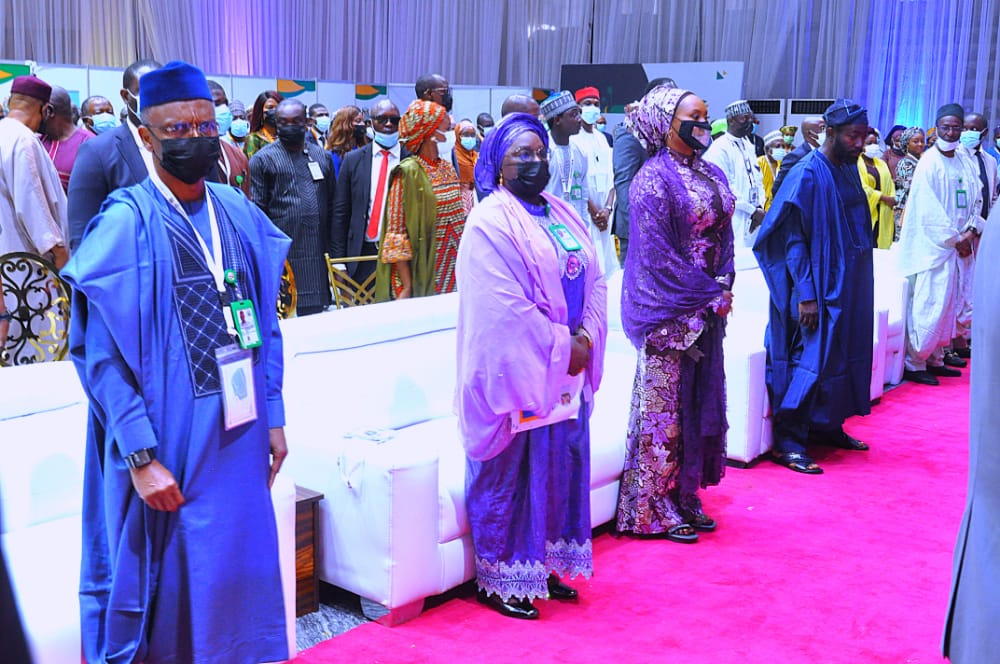
The immediate past Emir of Kano, Malam Sanusi Lamido Sanusi II, inaugurated the plan in Kaduna at the annual Kaduna State Economic and Investment Summit 6.0.
Sanusi congratulated Kaduna State for the feat, describing the aspiration outlined in the plan as “critical” to addressing the country’s dwindling economy resulting from the over-dependence on oil revenue.
He urged the state to continue creating an enabling environment for economic growth and development, noting that the country was in a crisis, with 98 per cent of revenue going into debt servicing.
According to him, focusing on a knowledge-based economy is a paradigm shift from the country’s undue dependence on an oil-driven economy.
Providing an overview of the plan, Mr Muhammad Abdullahi, Chief of Staff to Gov. Nasir El-Rufai, said it represented the blueprint of strategies and actions needed to achieve the development aspirations of the state.
“This Kaduna State Development Plan 2021 – 2025 was built on the experience of the 2016-2020 development plan, based on the Kaduna Restoration Master-Plan, with the mantra, ‘Let’s Make Kaduna Great Again’.
“This is in fulfilment of the 2015 campaign promise to improve the livelihood of the people.
“As with the previous plan, the government will ensure wide stakeholder engagement and participation in the continuation of the quest to restore Kaduna State to its historic glory,” he said.
Abdullahi said that the vision of the plan was to build a pathway for the transformation of Kaduna State into a digital economy that sustains growth and development and improves the quality of life of all citizens.
He explained that the vision manifests itself in a new Kaduna State that was self- sufficient, a digital economic hub and a dynamic national actor.
“It reflects the desire of the government and the people of Kaduna State to mitigate the developmental challenges and constraints that have stalled progress for too long.
“Also, the mission is to create skills, opportunities, and jobs using technology, where all citizens would have access to quality education and healthcare, live and move freely without fear of harm.
“The plan also envisaged a transparent and accountable governance with highly motivated and efficient civil service,” he added.
Abdullahi explained that N2.3 trillion would be required to implement the plan, adding that the government, through its Policy Councils, would coordinate, track, and persistently communicate progress on priority areas, to the relevant stakeholders and institutions.
The News Agency of Nigeria (NAN) reports that participants during a panel discussion on sustainable knowledge-based economy, pointed out that building a knowledge-based economy will make more sense if the population has access to computers and internet services.
Mr Mansur Ahmed, President of the Manufacturers Association of Nigeria (MAN), commended Kaduna State for making progress since the first edition of the investment summit in 2016.
Ahmed recalled that the state was one of the major industrial hubs in the country that provided over 30,000 direct jobs.
He urged the state government to reinvigorate its industrial sector to sustain the progress being recorded in attracting investment.
Also, Mr Yusuf Muntaka of the Nigerian Investment Promotion Commission, pointed out that the commission encourages, promotes, and coordinates investment in the country, stressing that the investment takes place in the states.
Muntaka lauded Kaduna Government for taking strategic steps to attract national and international investment for sustainable growth and development of the state.
NAN reports that the State government started organising the annual investment summit since 2016 to showcase Kaduna State to the world as an investment destination.
 Development Diary