By Philip Yatai
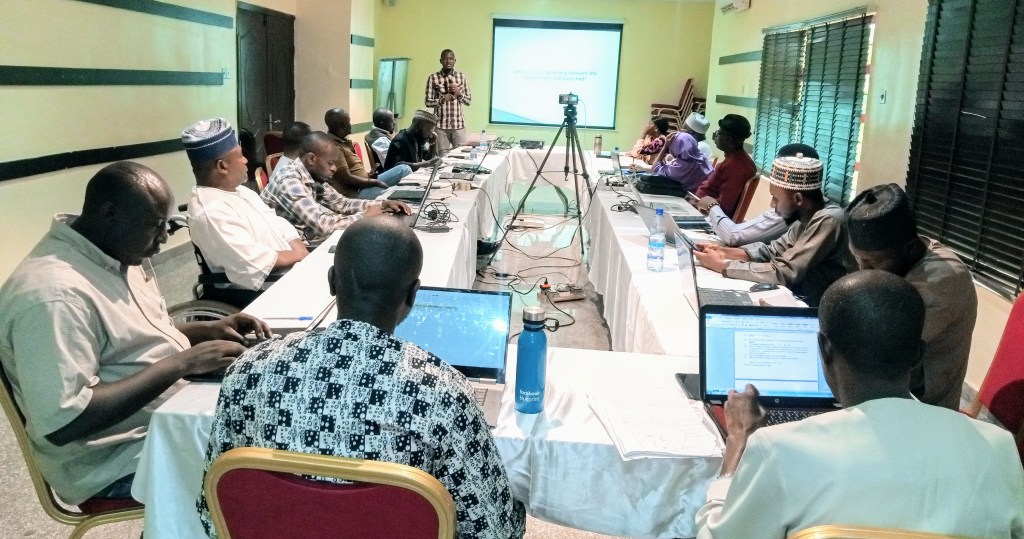
Some Civil Society Organisations (CSOs) on Thursday began a two-day meeting to develop strategies to influence Kaduna State 2022 draft budget before the State House of Assembly.
The meeting was supported by the United Kingdom Foreign Commonwealth and Development Office (FCDO) governance programme, Partnership to Engage, Reform and Learn (PERL).
PERL State Lead Facilitator, Mr Adejor Abel, said that the objective was to facilitate sectoral analysis of the 2022 draft budget by the various accountability mechanisms.
The accountability mechanism includes Kaduna Maternal Accountability Mechanism, Local Government Accountability Mechanism, Kaduna Social Protection Accountability Coalition, and Kaduna Tax Justice,
Others are Budget Research and Development Advocacy, Joint National Association of Persons with Disability, Health Reform Foundation of Nigeria and academia.
Abel added that the meeting was also to harmonize the sectoral budget analysis and strategies for budget advocacy to inform and influence the draft budget during the State Assembly Public Hearing.
“We want to put all citizens’ observations on the draft budget together for presentation during the public hearing to influence the budget.
“This is very critical, and we hope it will influence the budget at the appropriation level since the usual budget town hall did not hold.
“Our goal is to support how governments organize their core business of making, implementing, tracking, and accounting for policies, plans and budgets used in delivering public goods and services to the citizenry.
“We are also empowering citizens to engage the governance process for improved service delivery,” he said.
Also speaking, Mr Joshua James, Co-Chair (Citizens), Open Budget, Open Government Partnership (OGP) pointed out that the Kaduna state has made a commitment to open the budget processes for citizens to engage.
James described the public hearing as a window of opportunity for citizens to engage and influence the budget since the usual budget town hall meeting could not be held for unexplained reasons.
He said that the Commissioner for Planning and Budget Commission, Mr Muhammad Abdullahi, had apologised during a meeting with citizens’ representatives of the OGP for failure to hold the budget townhall meeting.
The co-chair added that the commissioner had confirmed that the State Assembly was working towards holding the public hearing to enable citizens to engage and influence the budget.
Speaking on participatory budgeting, Mr Yusuf Goje of Local Government Accountability Mechanism, described the budget as a “legal instrument’’ for citizens to demand for the primary purpose of government – security and welfare.
According to him, participatory budgeting means that the budget belongs to the people as guaranteed by the 1999 constitution.
He pointed out that the government as representative of the people was bound to open the budget process for citizens to engage and ensure their priorities were captured.
“Demanding for participation and accountability is a right backed by the 1999 constitution and not a privilege as it appears.
“We applaud the government for taken steps to open the budget process for citizens to engage but we want the state to do more in responding to citizens priorities in the budget,’’ he said.
The News Agency of Nigeria (NAN) reports that the state Gov. Nasir El-Rufai had on Oct. 12 submitted a proposed budget of N233 billion for 2022 fiscal year to the State Assembly for consideration.
The budget was made up of N146 billion for capital expenditure and N87.6 billion for recurrent.
 Development Diary