By Moses Kolo
The United Nations Children’s Fund (UNICEF) has restated commitment to partner with stakeholders to fast track implementation of the National Policy on Gender in Education (NPGE) in Nigeria.
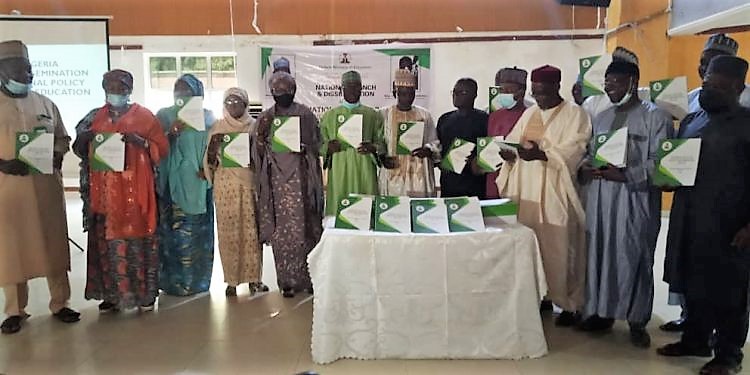
Mrs Saadhna Pandary, UNICEF’s Chief of Education, Nigeria, stated this at a Northern Nigeria Launch and Dissemination of the NPGE, on Tuesday in Kaduna.
The event was organised by the Federal Ministry of Education with support from the UNICEF and the World Bank.
Pandary, represented by Azuka Menkiti, UNICEF’s Education Specialist, said the launch of the NPGE was a demonstration of political will towards transformative and strategic investment in girls’ education in the country.
“We know what works to increase girl’s participation in education from cash transfer programmes, to compacts with men and communities, to multiple, flexible, and certified learning pathways, to investing in skills development for girls.
“Our challenge going forward is not to figure out what to do to achieve gender equality but how to deliver these proven strategies through sustainable delivery mechanism with speed, scale and quality,” Pandary said.
She pledged the readiness of the UN Agency to work with stakeholders including government, communities, teachers, students and development organisations to deliver high quality education services for all.
In her remarks, Mrs Binta Abdulkadir, Director, Senior Secondary Education, Federal Ministry of Education, said that the revised NPGE was approved by the National Council on Education.
Abdulkadir, represented by Mr Aderigbe Funsho, said the NPGE was developed and printed in 2006, adding that it was long overdue for review considering the emerging issues and identified gaps.
“We must all be committed to the implementation and use of the revised policy to reduce the disparities in access, retention and completion at all levels of education,” she said.
The Director said that the policy went through several stages including stakeholders’ engagement to determine the process of review, development of survey tools used in determining the implementation status of the first Gender Policy, and the pilot test of the tools developed in FCT.
Others were the zonal survey on the implementation status of the first policy, constitution/inauguration of Technical Review Committee and Consensus meeting for imputs/recommendation of the final draft.
Earlier, Mrs Fatima Lawal, Kaduna State Commissioner for Education, said the state government recorgnised the need for gender balance to achieve the desired goals and objectives towards moving education to the desired level.
“The state government will ensure that its educational policies are synchronise with the NPGE,” she said.
The News Agency of Nigeria (NAN) reports that highlights of the event were presentations by representatives of the 19 northern states.
The event was attended by government officials, politicians, Civil Society Organisations (CSOs), academics, among others. (NAN)
 Development Diary