By Philip Yatai
Stakeholders in the agricultural sector have urged the Kaduna State Government to develop specific programmes to improve women’s access and ownership of farmlands to boost agricultural production.
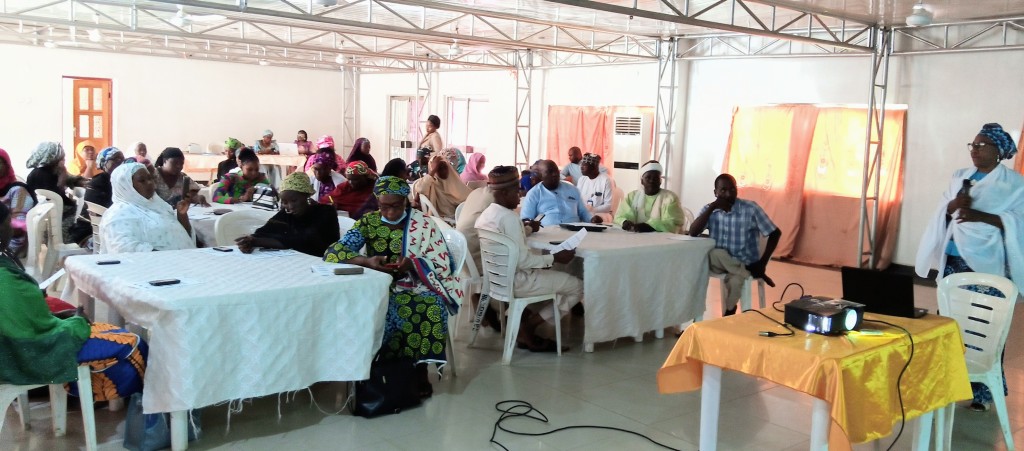
The stakeholders made the call in Kaduna at the validation of Gender Situation Analysis of Agriculture and Rural Development in Kaduna State, facilitated by the Legal Awareness for Nigerian Women (LANW).
The objective of the study is to highlight the differences and inequalities between women and men in relation to their tasks, access to resources, opportunities, constraints and priorities in agricultural production.
The data, according to LANW, will be used to develop a gender policy in agriculture for the state.
Mrs Hannatu Soni, State Coordinator, Small Scale Women Farmers Organisation of Nigeria (SWOFON), said that ownership of lands had remained the greatest challenge affecting women productivity in agriculture.
Soni said that most of the land women cultivated were borrowed, adding that the moment the land became very fertile and productive, it would be taken away, leaving them with nothing.
Similarly, Mrs Aisha Usman, Leader of Kafin Madani Women Cooperative Society, said that most government interventions did not get to the real famers, particularly women.
Usman called on the government to be deliberate about empowering women with land they could cultivate without limitations.
On his part, Mr Yusuf Goje of Coalition Associations for Leadership Peace Empowerment and Development, said that the state budget was not gender sensitive.
Goje added that the agricultural sector was also grossly underfunded, stressing the need for specific intervention that addressed the needs of women, particularly access to land and financial resources.
Dr Abubakar Bayero, General Manager, Kaduna State Agricultural Development Agency, advised the women groups to write officially to the state government requesting for allocation of land for agricultural production.
Bayero expressed optimism that the responsible authority would allocate available government lands across the state to women to cultivate without hindrance.
Mrs Rebecca Sako-John, Member of the Board of Trustee, LANW, explained that the objective of the meeting was to present to the stakeholders the findings of the gender situation analysis for validation and identification of gaps.
She said the gathering was also to agree on key recommendations for incorporation during the development of the draft policy.
This, according to her, will increase women inclusion and implementation of the National Gender Agricultural Policy and its domestication in the state.
She explained that LANW, in partnership with Value Seeds Limited and Palm Valley Nigeria Limited, established the Gender Consortium on the Alliance for Green Revolution in Africa (AGRA) project.
The report of the gender situation analysis has revealed that the lack of ownership and control of farmlands is limiting women’s productivity in agricultural production in Kaduna State.
The report, obtained by NAN, also shows that the lack of control over lands prevents women from expanding production or the choice of crops to produce.
It also shows that men have access to all critical resources for agricultural production more than women, due to biased traditional practices.
The report also indicates that lack of funds was the most important factor hindering women from accessing land, followed by culture, religion, illiteracy, and insecurity.
The analysis further shows that women are not fully engaged in agricultural activities, adding that women and men have distinct but complementary roles in agricultural enterprises.
It, however, shows that men have more control and benefits on available resources than women.
The report recommended massive sensitisation and awareness campaigns on the negative cultural and traditional norms against women that are detrimental to agriculture and rural development.
On the male dominated-land ownership and control, the report recommended programmes specifically designed to improve women’s access to land.
This, it said, would enable women to increase their productive capacities, promote involvement in agricultural activities and improve livelihood status. (NAN)
 Development Diary