By Philip Yatai
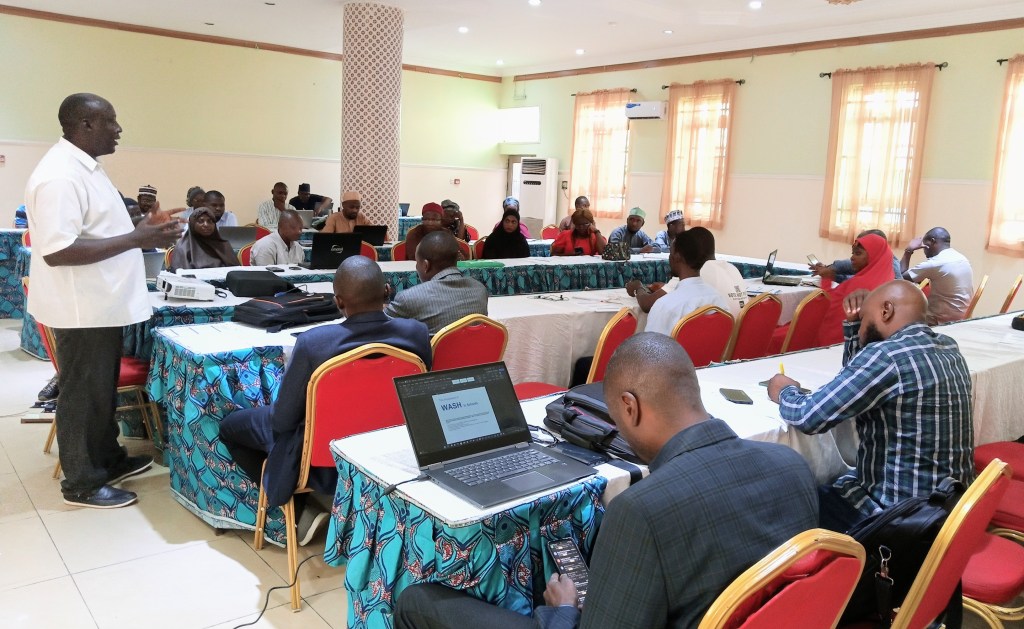
Some citizens’ accountability groups on Wednesday developed strategies and reviewed tracking tool for effective monitoring of the implementation of the 2023 education, health, and local governance budget in Kaduna State.
The groups are the Kaduna Education Accountability Mechanism (KADBEAM), Kaduna Maternal Accountability Mechanism (KADMAM), and Kaduna Local Government Accountability Mechanism (LGAM), including Tax Justice Network, Kaduna Social Protection Accountability Coalition, and the Disability Community.
The groups are permanent dialogue platforms where citizens groups and government meet to discuss progress and challenges in service delivery for transparency and accountability.
This is in line with the co-creation principle of the Open Government Partnership (OGP) between government and citizens.
The meeting was organised by Partnership to Engage, Reform and Learn (PERL) a governance programme of the United kingdom’s Foreign, Commonwealth and Development Office in collaboration with KADBEAM, KADMAM, and LGAM).
The Citizens Co-Chair, KADBEAM, Mr Tijjani Aliyu, said that reviewing the tracking tools was a crucial step towards effective monitoring of projects and programmes in critical sectors.
Aliyu Explained that KADBEAM, supported by PERL, had earlier developed a tool used in the tracking of procurement and delivery of education projects.
He said that the review of the tracking tool would make it adaptable by other groups working in other sectors to ensure holistic monitoring of government projects in the state.
Earlier, Mr Simeon Olatunde, a member of KADBEAM, said that the objective of the meeting was to reflect on the 2022 education procurements monitored by KADBEAM.
Olatunde also said that the meeting was organised to review the existing education sector tracking tool for adaptation by KADMAM, LGAM and other accountability groups for monitoring 2023 budget.
He added that the meeting was also to agree on strategies for monitoring the 2023 budget by the different accountability mechanisms and community members across the state.
The OGP Citizen’s Co-Chair, Hajiya Hadiza Umar, said that the measure was very crucial to citizens’ participation in the delivery of projects and services in the state.
Umar said that the harmonised tool will significantly strengthen evidence-based engagement of the governance processes in their demand for quality service delivery.
Mr Abel Adejor, State Lead Facilitator, PERL, described the tool as a “significant innovation” in the tracking and monitoring of education sector procurement processes, infrastructure, and other service delivery in the sector.
“We want to see how we can make the tool adaptable by other accountability groups, particularly KADMAM, LGAM and community members in the drive to strengthen accountability and transparency in budget implementation,” he said. Similarly,
Mr Chanan Solomon, Monitoring, Evaluation and Learning Consultant, Lafiya, an FCDO-supported health programme, said effective tracking and monitoring of projects would strengthen accountability and transparency in government delivery of programmes.
 Development Diary