By Philip Yatai
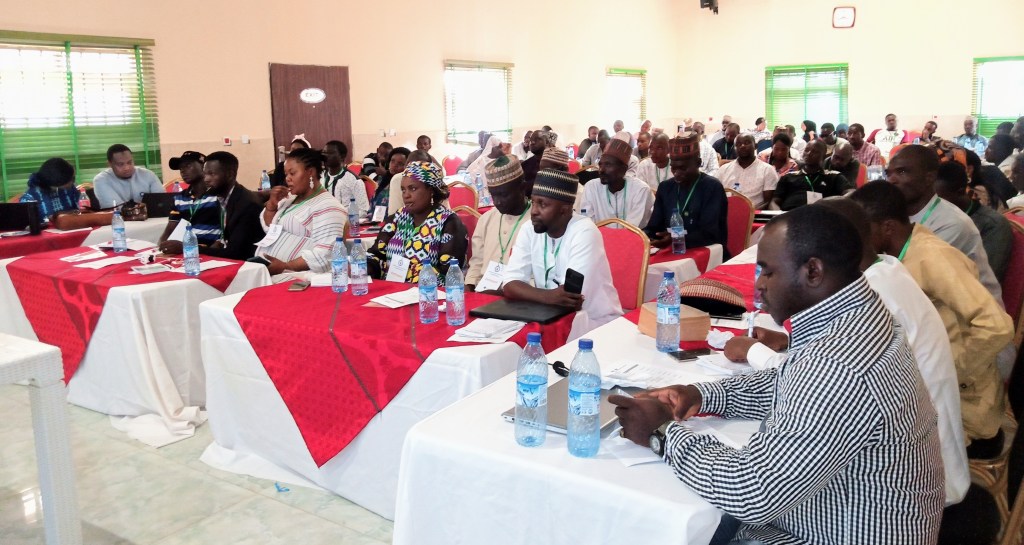
The Kaduna State World Bank-supported Adolescent Girls Initiative for Learning and Empowerment (AGILE) project has trained 76 Education Management Information System (EMIS) officers on quality data collection and reporting.
Ms Hilda Yabai, Monitoring and Evaluation Officer of the project said during the training in Kaduna on Wednesday that the measure was to ensure value for money in the delivery of the AGILE project.
Yabai explained that the participants comprised of three EMIS officers each from the 23 Local Government Areas of the state, four from Ministry for Education and three from the State Universal Basic Education Board.
She said that accurate and quality data was very critical for decision making during implementation of the project, stressing that without accurate data, the project officers would make faulty decisions.
“Otherwise, eventually we will find out that we have spent so much in executing activities without achieving the desired results.
“AGILE want to ensure that all its activities create safe and accessible learning spaces for girls and ensure that the girls are happy and stay in school until they graduate secondary school.
“We want to get accurate data to know the right intervention to take to each school given their peculiarities according to communities and local government areas.
“The project wants to know how many girls transit from Primary six to junior secondary schools and how many girls eventually graduate from secondary school,” she said.
She added that parts of the data that the EMIS officer would be generating include the population of schools, student/teacher ratio and other valuable indicators.
This, according to her, will enable the project to prioritise which school should be renovated and rehabilitated and which school needs construction of new classes, as well as water sanitation and hygiene.
The World Bank M&E Lead for the AGILE project, Mr Adebayo Solomon, stressed that collecting accurate, consistent, reliable, timely and complete data was critical to the success of the project.
Solomon explained that the project has some set of indicators that represent the lifeline of the project, adding that the project would not make progress without achieving the indicators.
He said that the training was crucial in equipping the EMIS officers with requisite skills to collect data that would show the progress the project was making or otherwise.
“This training is designed to ensure that the EMIS officers are clear on the kind of data they need to go and collect and understand the meaning of the data they are collecting.
“They also need to know the implication of the value of the data,” he said.
He added that training the EMIS officers would enable the project implementing officers to interrogate the processes, noting that where the process was faulty, the likely results would be faulty.
According to him, interrogating the process will ensure that the process is thorough and effective which in the long run will ensure the attainment of expected results.
One of the facilitators, Mrs Zainab Musa, harped on collaborative data quality practices for school data collection.
According to Musa, data quality is the degree to which data meets the requirements of the processes it is used in.
Another facilitator, Mr Ayodeji Yahaya, identified the key components of data quality as accuracy, reliability, integrity, precision, timeliness, and complements.
Yahaya stressed that without these components, no data would be reliable. (NAN)
 Development Diary