By Sani Idris Abdulrahman
Kaduna Local Government Accountability Mechanism (KAD-LGAM), has unveiled the Citizens’ Participatory Audit (CPA) report on selected 2024 education projects across 15 LGAs in Kaduna state.
At the dissemination of the report on Tuesday in Kaduna, Alheri Waje, the Lead of Education Cohort of KAD-LGAM, said that in 2025, the mechanism in collaboration with the Office of the Auditor-General for Local Governmenta and development partners, conducted the CPA.
She explained that the audit, which covered selected projects across 15 LGAs of the state came as the state prepared for full local government financial autonomy following the Supreme Court judgment.
She said the CPA aimed to strengthen accountability, promote community participation and assess whether education investments were meeting citizens’ needs.
According to her, findings showed mixed progress, with only 34.6 per cent of projects completed, 34 per cent ongoing and 21.2 per cent yet to commence.
She added that 80.8 per cent of schools lacked project signposts, 78.8 per cent had no perimeter fencing and 40.4 per cent had no water source.
Waje said these gaps undermine safety, learning environments and accountability in public schools.
She further disclosed that procurement data was largely inaccessible to monitors and communities, limiting transparency and effective oversight.
In spite of the challenges, Waje said still communities showed strong interest in monitoring projects and holding government accountable.
She stressed the need for institutionalised participatory monitoring, improved transparency and timely funding to strengthen education service delivery and citizens’ trust.
Waje urged the Kaduna State Government to publish procurement, contract awards, and implementation data for all education projects at state and LGA levels, aligning with Open Government Partnership (OGP) commitments.
“Education projects should display clear signposts showing contractors, costs, and timelines, enhancing transparency and enabling communities to monitor progress effectively.
“Fences should be ring-fenced, project management systems strengthened, and performance-based monitoring adopted to hold contractors accountable for delays or abandoned education projects.
“Priorities include fencing schools, providing water sources, basic classroom facilities, and integrating school security into LGA budgets with trained guards where feasible.
“Citizen monitoring should be institutionalised through committees and participatory audits, while predictable fund releases and a joint government-civil society scorecard will ensure accountability and build public trust,”she said.
Presenting an overview of the CPA, Mr Seth Luke, Head of Programmes, KAD-LGAM, said it was designed to deepen transparency and accountability in the management of public resources, particularly in the education sector across Kaduna State.
Luke said the exercise assessed budget releases, procurement compliance, quality of work and the execution status of projects, using first-hand feedback from citizens.
He added that the initiative aligned with the Kaduna State Audit Law and the OGP commitments, which emphasisd citizens’ involvement in governance, budgeting and project monitoring.
According to him, the CPA process allows citizens to provide informed feedback after projects have been planned and executed, thereby helping government understand what has worked, what has not, and what can be improved in subsequent budget cycles.
He lamented that weak systems at the local government level continue to affect service delivery, noting that ineffective oversight often contributes to poor project outcomes, including substandard infrastructure and limited impact on communities.
Luke, however, commended the Kaduna state Government for opening its processes to public scrutiny, describing the CPA as evidence of the administration’s willingness to strengthen accountability and institutional responsiveness.
He also praised the office of the Auditor-General and the Office of the Auditor-General for Local Government for their collaboration, stressing that the success of the exercise depended largely on their support and openness to citizen engagement.
Luke said the report would provide actionable recommendations to the Public Accounts Committee and the House Committee on Education to improve oversight and ensure better value for money in education spending.
He reiterated that the CPA was not merely about presenting findings, but about reinforcing a culture where citizens actively participate in assessing government performance and shaping more effective public service delivery.
Earlier, the Team Lead of KAD-LGAM, Mr Yusuf Goje, said the engagement aims to formally present the printed CPA report on selected education projects across the 15 LGAs of the state.
Goje said the report assessed budget releases, procurement compliance, quality of work, and the execution status of projects, drawing from first-hand citizen feedback and field verification.
He said it also seek to generate clear, actionable recommendations for the Public Accounts Committee and the House Committee on Education to strengthen legislative oversight, improve value for money and enhance service delivery within the education sector.
According to him, this is in line with Kaduna State’s commitment to transparency, accountability, and citizen participation under the OGP framework.
The team lead also expressed optimism that the report, would strengthen accountability at the local government level, help address broader social challenges, including poverty, out-of-school children, and maternal and child health concerns, given that local governments are closest to the people.
Dr Abubakar Abdullahi, the Auditor-General of Kaduna State, lauded the CPA report, noting that it provided critical insights for improving transparency, accountability, and efficiency in the implementation of education projects.
Abdullahi represented by Yohanna Joshua, Deputy Director Parastatals, stressed the need for strengthened financial management, regular audits, and closer collaboration with communities to ensure projects meet their intended objectives and deliver tangible benefits to citizens.
Also, Atiku Musa, Auditor-General of Local Governments in the state, commended the CPA report, describing it as a vital tool for improving accountability, transparency, and service delivery in Kaduna State’s education sector.
He emphasised the importance of timely budget releases, strict adherence to procurement guidelines, and active citizen involvement in monitoring projects, noting that the measures would strengthen oversight, reduce leakages, and ensure better outcomes for communities.
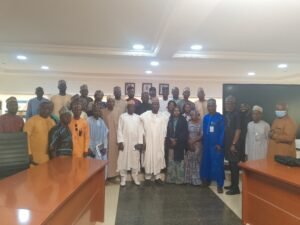
The News Agency of Nigeria (NAN) reports that the event had in attendance officials of the the state Ministry of Education, Universal Basic Education Board and an array of development partners, among others.
It was supported by Partnership for Learning for All in Nigeria
(FCDO-PLANE) and the Partnership for Agile Governance and Climate Engagement (PACE), among others.(NAN)
 Development Diary