By Sani Idris Abdulrahman
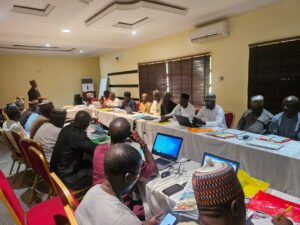
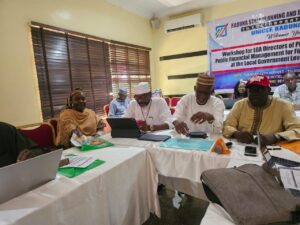
The Kaduna State Government has trained Directors of Planning and Budget from all the state’s 23 Local Government Areas on how to manage public funds to finance social protection programmes.
The News Agency of Nigeria (NAN) reports that the two-day workshop was organised by the state Planning and Budget Commission (PBC) in collaboration with the United Nations Children’s Fund (UNICEF), Kaduna Field Office.
At the opening on Wednesday in Zaria, the Permanent Secretary, PBC, Mr Mukthar Abdullahi, recalled that UNICEF had supported a capacity-building for the 23 local government councils earlier.
He said the workshop provided leadership and policy direction for strengthening public financial management at the local government level.
‘’The current workshop is a follow-up, focusing on technical officers responsible for translating policy directions into realistic budgets and effective financial management, ‘’ Abdullahi said.
He urged the directors to ensure that local government priorities were properly reflected in plans and budgets.
He listed education, health, nutrition, water, sanitation and hygiene, and social protection among key priorities requiring adequate budgetary attention.
Earlier, the Permanent Secretary, Kaduna State Ministry of Local Government Affairs, Dr Mahmud Lawal, said the programme came at a critical time.
Lawal said local government councils were being repositioned to strengthen financial management, improve budget credibility and ensure public resources were directed toward impactful programmes.
‘’Directors of budget have a strategic responsibility to translate policy priorities into realistic, credible and result-oriented budgets.
‘’The ongoing local government public financial management reforms, including adoption of the National Chart of Accounts and harmonised budget practices, will improve accountability.
‘’The reforms provide an important foundation for improving budget preparation, execution, reporting and accountability across the 23 local government areas, ‘’ he said.
Lawal said social protection was particularly important because local governments were closest to the people and strategically positioned to respond to vulnerable households.
He listed children, women, persons with disabilities, the elderly and other disadvantaged groups among those requiring effective social protection interventions.
He, however, said effective social protection required good policies as well as adequate, predictable and well-managed financing.
The permanent secretary urged participants to deepen their understanding of integrating social protection priorities into local government plans and budgets.
He said this was particularly important, as preparations for the 2027 local government budget had commenced.
Lawal also urged the participants to strengthen resource prioritisation and ensure that expenditure translated into results and value for money.
He called for stronger collaboration among relevant departments and stakeholders to ensure social protection interventions were coordinated, sustained and aligned with government priorities.
He appreciated development partners, particularly UNICEF, for their continuous support toward strengthening public financial management and social protection financing at the local government level.
The Executive Chairman, Kaduna State Fiscal Responsibility Commission, Alhaji Sani Bako, said the quality and credibility of budgets depended significantly on the competence, professionalism and integrity of budget officers.
Bako said public financial management was not simply about preparing figures and producing budget documents.
‘’It involves ensuring that public resources are planned, allocated, utilised, monitored and reported in ways that produce measurable value for citizens, ‘’ he said.
According to him, a credible budget is a fundamental instrument of governance that communicates government priorities, resource allocation and expected outcomes.
He said the budget should not become merely an annual administrative exercise, but should serve as a fiscal contract between government and citizens.
‘’Strengthening the capacity of local government budget officers is strategically important for improving budget credibility and fiscal responsibility.
‘’A credible budget requires a reasonable relationship between approved estimates, actual revenue, expenditure and the results ultimately delivered to citizens, ‘’ he said.
He urged local governments to avoid unrealistic projections, weak revenue assumptions, poor expenditure prioritisation and inadequate monitoring of budget implementation.
Bako said: ‘’Budgets must be realistic, transparent, evidence-based, responsive to local priorities, consistent with available resources and focused on measurable outcomes.
‘’Local governments are closest to the people and therefore expected to respond to immediate needs such as primary healthcare, basic education and rural roads.’’
He said fiscal responsibility directly affected citizens’ daily lives because every naira wasted, misallocated or poorly managed represented a lost opportunity to improve welfare.
Representing UNICEF Chief of Field Office in Kaduna, Dr Gerida Birukila, the Social Policy Officer, Wakidara Akila, said UNICEF supported development through public financial management and social budgeting.
Birukila said UNICEF, as an advocate for children, encouraged governments to consider children’s needs when allocating resources, particularly in social sectors.
‘’The workshop will examine social budgeting and ways of ensuring children remain central to budget preparation and implementation.
‘’Kaduna’s budgetary allocations to education and health are important, but attention should also be paid to how resources are utilised, ‘’ she said.
She recalled that UNICEF previously supported capacity building for Directors of Planning and Budget on programme-based budgeting.
She said the current workshop would further sensitise participants on social protection financing, particularly interventions targeted at children.
Birukila urged participants to develop practical strategies for addressing development challenges and ensuring budgetary allocations translated into improved outcomes for vulnerable citizens.
 Development Diary